Unhampered
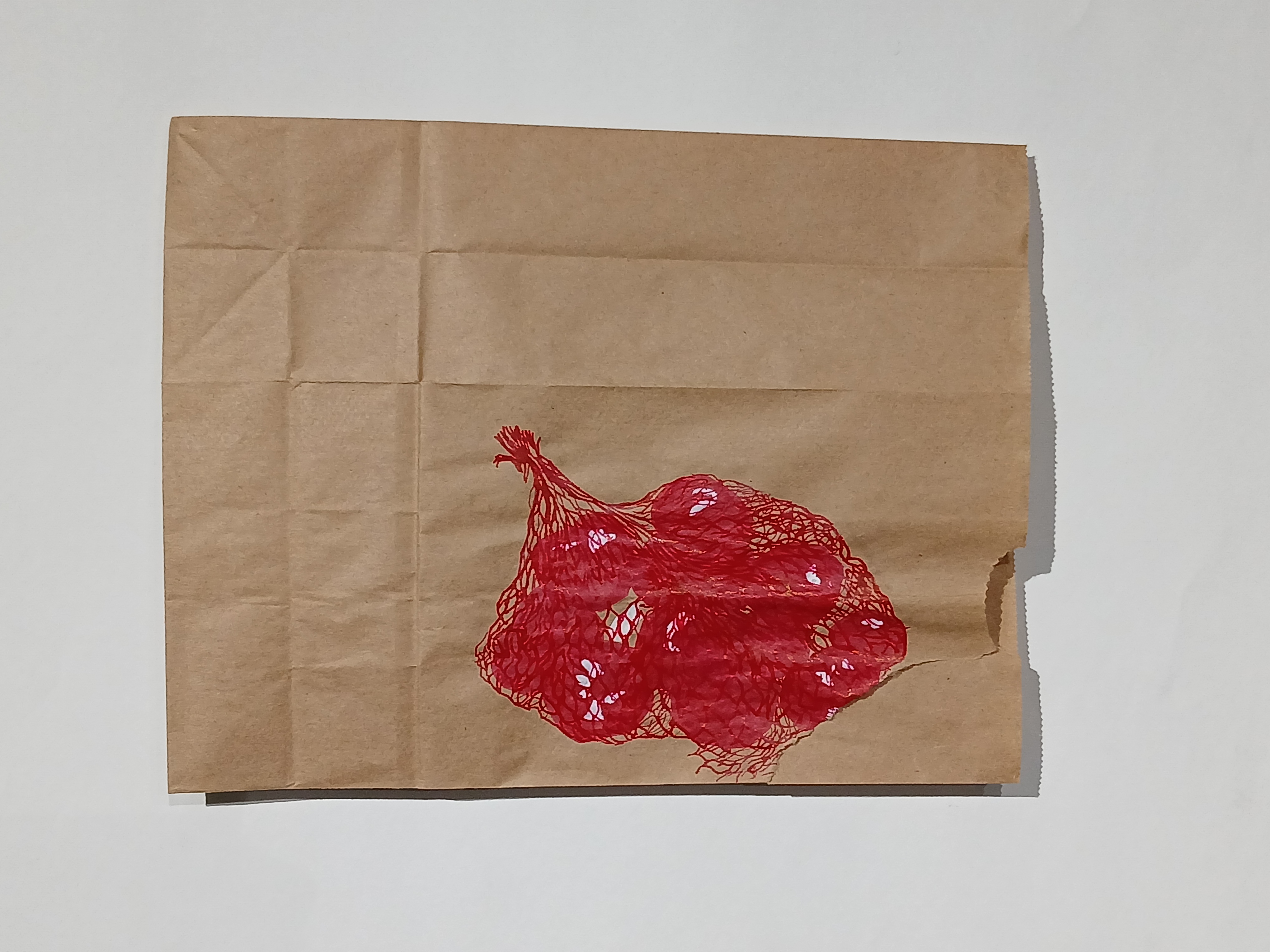
Unhampered is a collaborative art workshop and body of work developed to support the Red Deer Food Bank. Unhampered was developed in three interconnected stages: A visually researched body of work; a community carving workshop to foster discussion; and a live printing event. Through this experience, I explored how fine arts can foster communication and support for local issues.
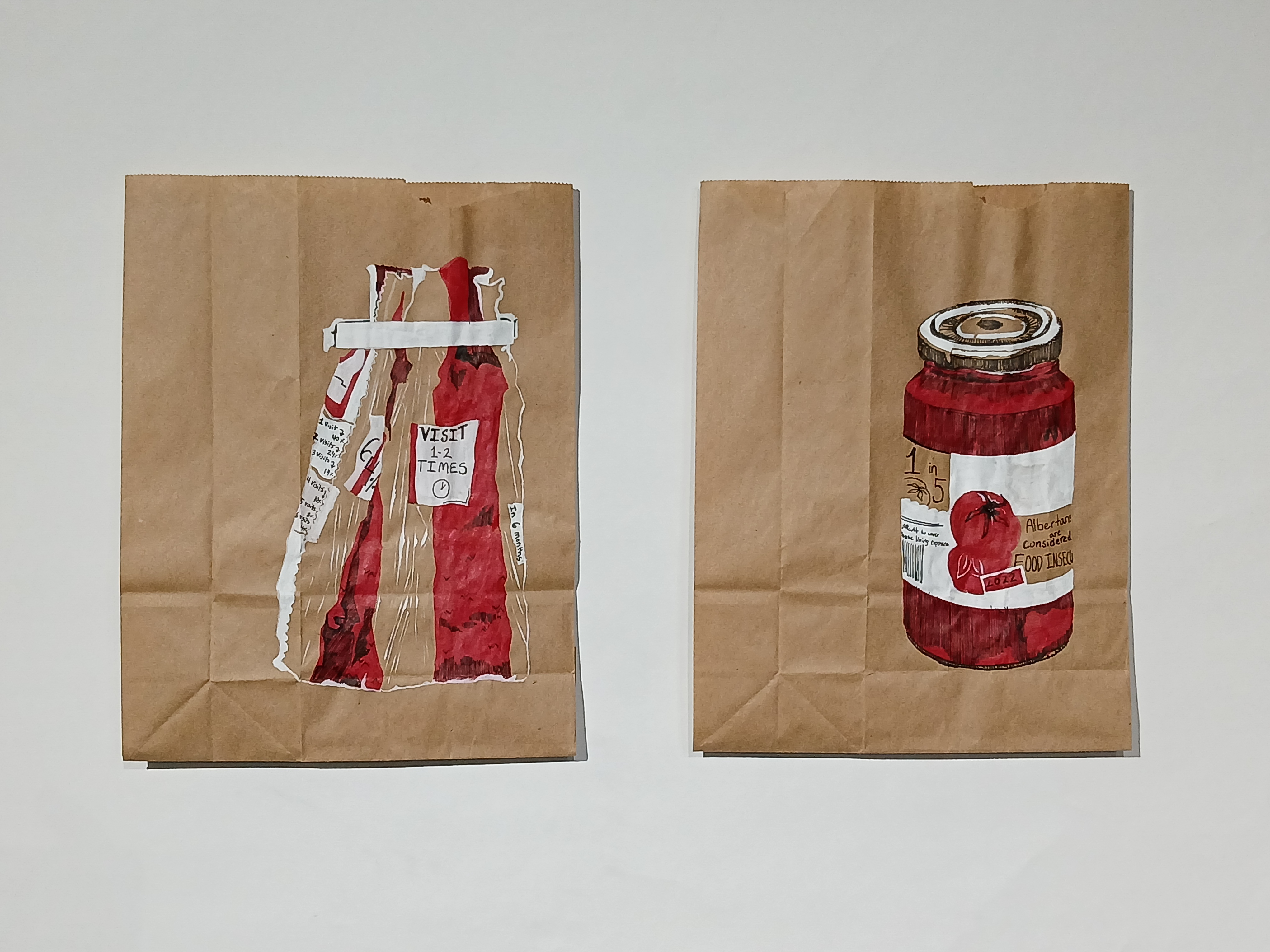
The body of work explores imagery from my personal pantry, 2022 statistics from the Red Deer Food Bank, and found grocery material. Through paper bags, I consider the relationship between grocery shopping, in-store donations, and what composes a meal. I look to my own pantry, paralleling the most requested donation staples. I became intrigued by the pattern of tomato net bags; connecting it to the development of an indoor cherry tomato greenhouse at the Food Bank supported by Co-Op.
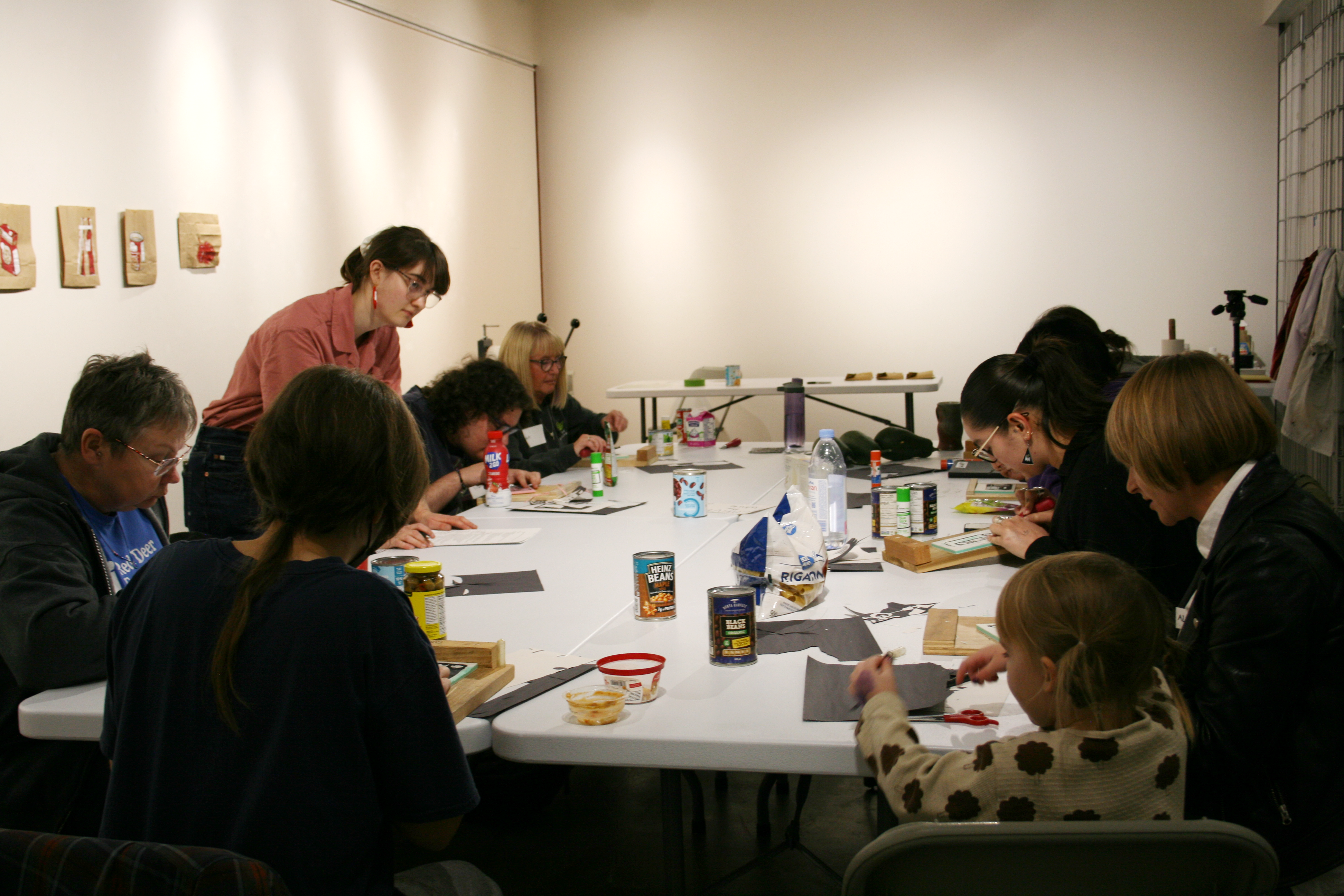
Unhampered Workshop, Bailey Horton, Sage Huard, Leah Beeton, Brian Mcarthur, Alysse Bowd, Alice Kolisnyk, Nadya De La Cruz, and Heather Agnew, Linocut Carving and Discussion, 2024
I hosted a linocut carving workshop with members of Red Deer Polytechnic and the Red Deer Food Bank. Our goal was to foster a conversation on how we can each support food security in our communities. Each attendee contributed a food item to use both as a reference for their print matrix carving and as a donation. Together, we created a series of linocuts to print during the event.
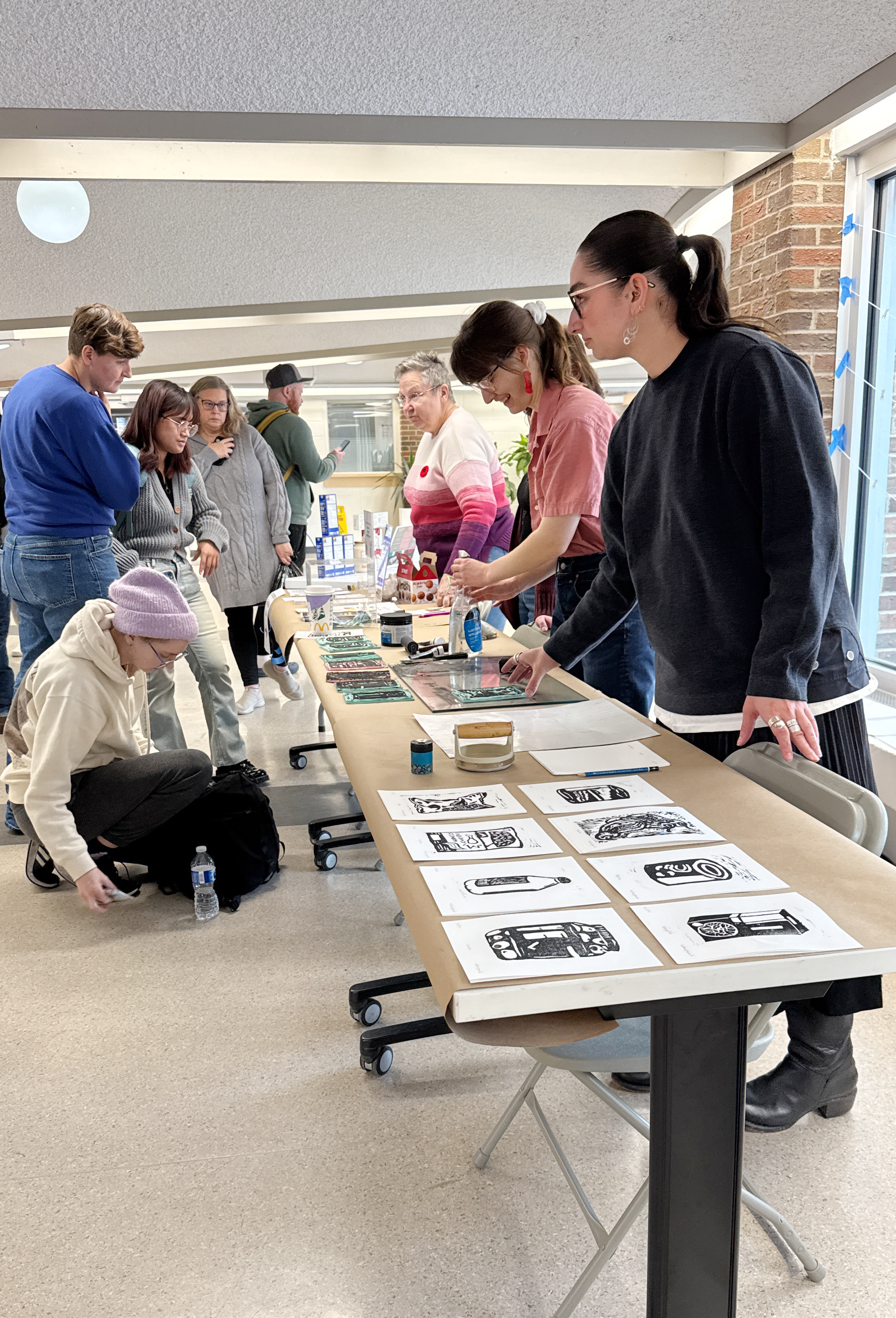
On Nov 22nd, 2024, I worked with volunteer artists and the Red Deer Food Bank to host a live printing event in the RDP Forum. Members of the public could take a print in exchange for taking the time to learn about the services Red Deer Food Bank offers to the community, or donations to support the cause. Our goal was to create a way for members of our community to engage with the Food Bank regardless of their ability to donate.
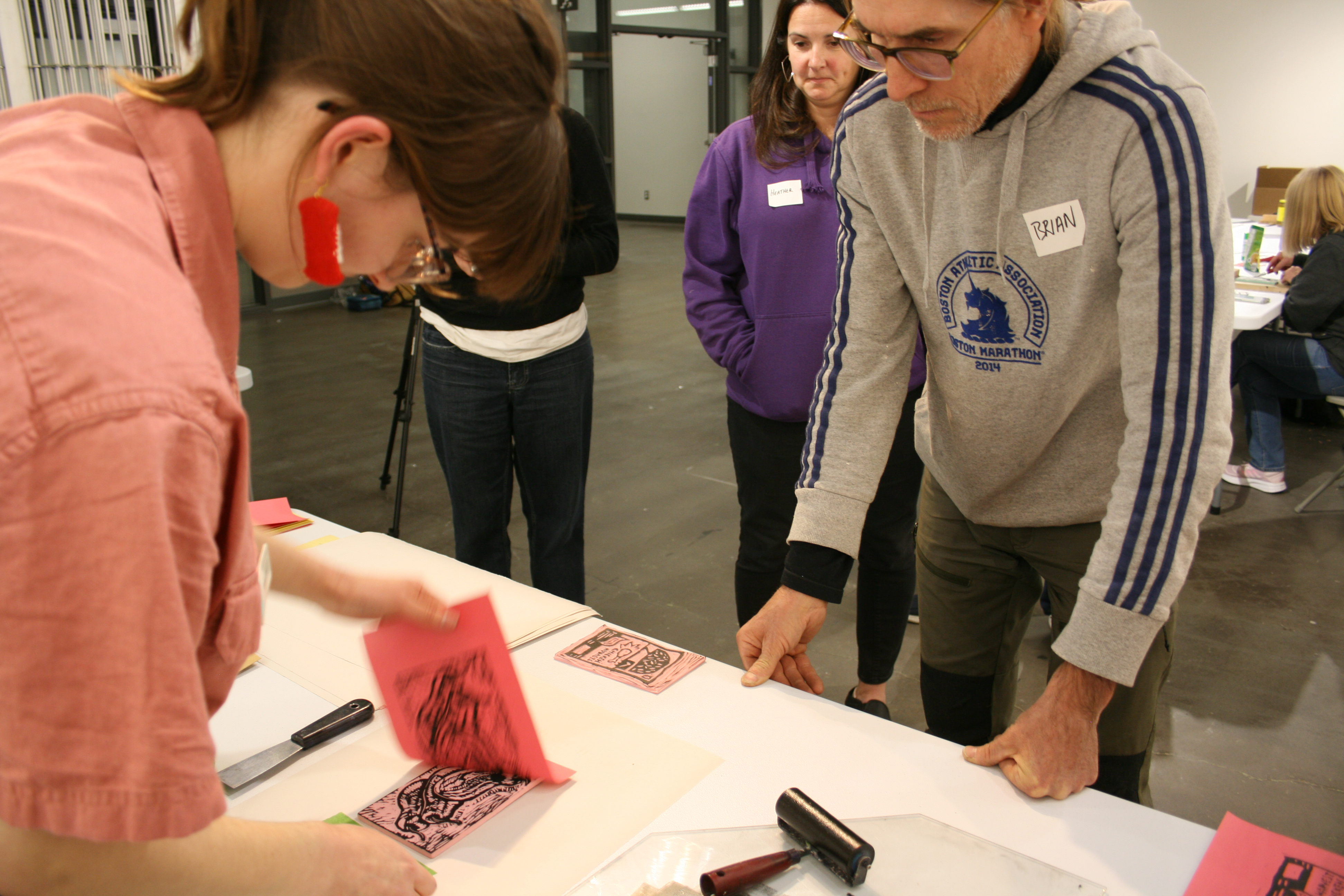
Workshop Conversation
During the workshop, I led a conversation around the 4 angles of food security / insecurity. Those pillars are quantity, quality, social acceptability, and social / economic inequalities. These are the highlights of our discussion.
Quantity: We need enough food to sustain hunger. Ergo: People go hungry.
Why might someone not have enough food? Cost? Family? Other priorities?
- Transportation and ability to get food to purchase
- Lack of experience with cooking
- Cooking can be overwhelming
- For example, food safety, temperature, flavours, may cause someone to avoid cooking
How could going hungry affect your life / work / ect?
- Miserable / emotional and physical affects
- Can get stuck in your own head, thought cycles
- Lack of focus and energy
- Isolating
How can we support specifically the Quantity of food available in our community?
- RSA Drive
- Competitive fundraisers
- Donation bins
- Education/resources on how to store / avoid food waste
- Harvesting initiatives
- Personal gardening
- Food Banks
What are places / ways quantity of food is currently supported?
- Common Ground Growing Garden
- https://rethinkreddeer.ca/commonground
- Student Association Food Bank
Quality: We need food that is Safe, Undented/Undamaged, and Diverse
Why might someone sacrifice on the quality of their food?
- Make money go further/ prioritize quantity?
- Less time to cook, opt for faster/prepared foods.
- Price, fresh or local food can be more expensive
- Lack of quantity, so you make do with expired or out of date foods
- Lack of access to knowledge, resources
What can a diverse / safe diet of food look like?
- A veggie or fruit alongside the meal
- “Balanced meal”
- Different perspectives / cultures creates a healthy variety of diet
- Globalization allows for more range in diet, food from different cultures.
How can it affect health? Focus?
- Sick more often, stomach aches.
- Hard to concentrate
- Brain can eat itself
- Anxiety, headaches
- Disruptive to sleep
- Acid Reflux
- Isolating
How can we support the availability of good quality food?
- Frozen foods make certain foods more accessible, eg vegetables and fruit, fish.
- Cookbooks to supplement interest in foods you enjoy
- Education on cooking, places to source
- Liquidation centers, cheaper food that markets discarded
- There is one downtown
Social Acceptability: Where food is sourced / the associations that go with it. Ergo: Sometimes food banks can be associated with ideas or identities
Where do you source your food?
- Costco, chain brands, grocery stores, personal gardens, Vending Machines, Bianca’s Liquidation Supercenter
- College added vending machines near the library for food options overnight.
What do you associate with the following ways to source food?
- Grocery Store
- Soup Kitchen
- Dumpster Diving / Discarded Packaged Goods
- Community Garden
- Food Bank
- Restaurant
- Grocery is an everyday place, certain stores are better for different needs and prices.
- Dumpster Diving is more positively regarded than it used to be, lots of information on it. Important to sanitize. Very dependent on location, safety, better to go in groups.
- Social Justice
- Soup Kitchens often serve homeless individuals, or low/fixed income individuals
- In general, shame can come from messiness, where you source food, and if your food is different from others, eg a cultural food.
What are associations that may be made with the food bank?
- Positive, and negative, eg potential “identities” people may associate with going to a food bank
- Food Bank is a “helpful, cool, agent of change in the community”. They are heavily volunteer run, and community driven. Eye opening to the realities of food insecurity.
How can we increase awareness / decrease shame around using the food bank in our communities?
- Leftovers Organization
- Red Deer Food Map
Social + Economic Inequalities: Barriers to accessing food, eg Low income, loss of job, ect
What may be barriers to accessing food or food bank food?
- Hours of the Foodbank? ID?
- Time one is able to direct towards cooking is shortened when you are working multiple jobs.
- Budgeting / Money Management Skills?
- Transportation?
- Homelessness (Doubled since last count in 2022)
- Transportation, buses have time and cost limitations, not everyone has a car.
- How to access, lack of information
- Stigma, food banks are often considered the last resort, rather than something to help prevent you from hitting rock bottom.
How can we help remove barriers to accessing food / or support services that do?
- Wellness Alliance
- Share information
- Better infrastructure